Myth busting: Acupuncture is not just needles
A lot of people think of needles when they think of acupuncture, but the practice of acupuncture is a lot more than this.
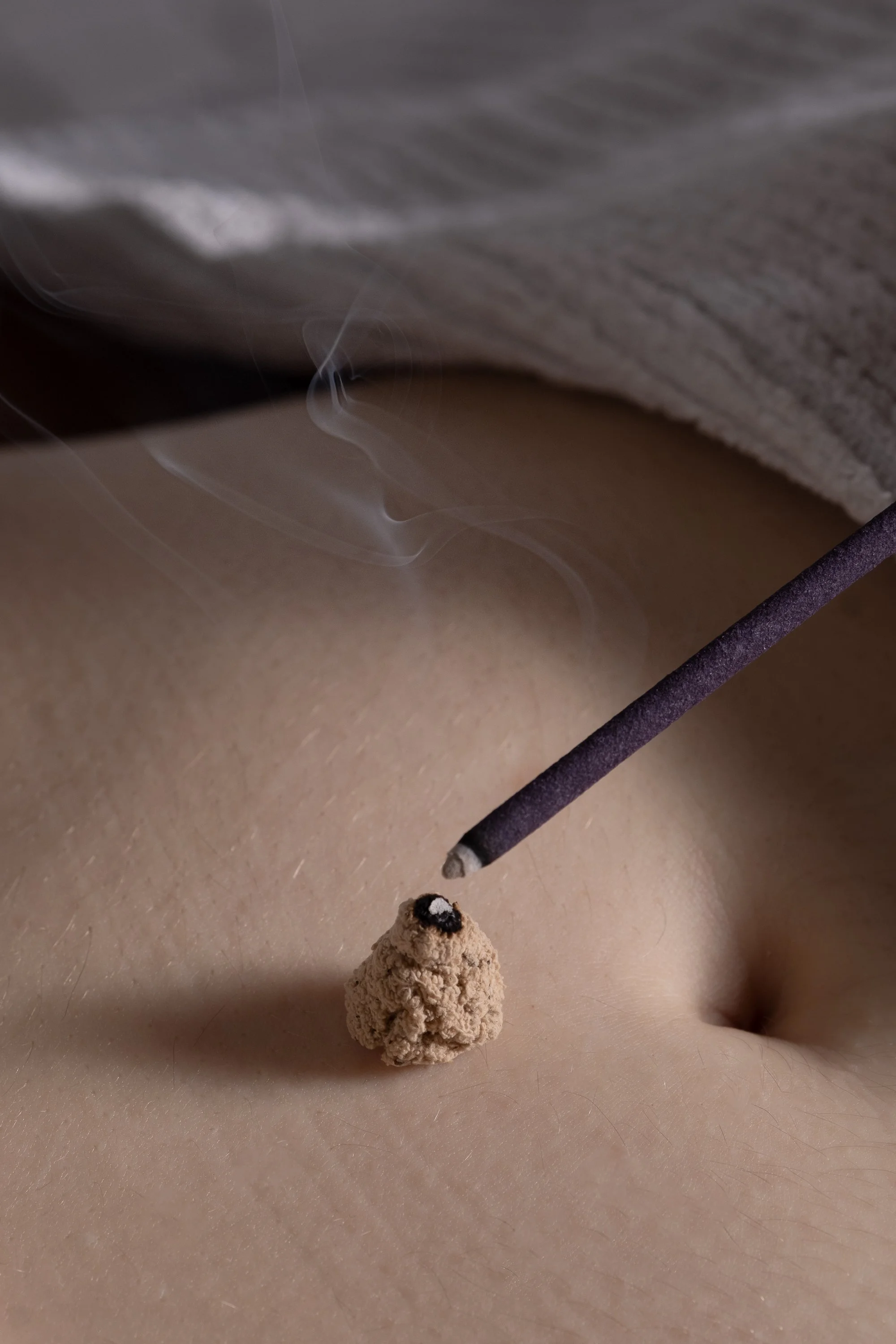
The word acupuncture is a mistranslation of the Chinese word Zhen Jiu. The first part of the word Zhen, refers to the tools (needles) used, and the second part, Jiu, refers to the use of moxibustion or moxa. Moxa involves the burning of a herb called Ai Ye, or mugwort on or near the skin for therapeutic effect. Traditionally, moxa was about half of the practice of acupuncture, with needles being used the other half of the time. In Japan there are some practitioners who only use moxa to treat the points to great effect. There is an argument that the addition of the word “puncture” in the name acupuncture was a mistranslation, as moxa is never used to puncture the skin and 3 of the 9 original needles were also not used to puncture the skin.
Moxa is a deeply powerful practice that can challenge our understanding of acupuncture if we think that the therapeutic effect is only coming from the stimulation of the nerves and muscles by the insertion of needles. Acupoints are more than buttons that are simply pressed or stimulated by needles, they are gateways into deeper layers of the body and when used correctly they can stimulate profound healing.
Biomedical view of moxibustion
There is increasing research that supports the use of moxa for various therapeutic effects. Studies show that the burning of the moxa on or near the skin can lead to an increase in the production of red blood cells and the regulation of white blood cells.It is for this reason it has been used by Australian organization Moxafrica to support the treatment and recovery of tuberculosis in HIV sufferers.
Ai Ye is understood from a Chinese medicine perspective to be very healing and nourishing for the body, warming the meridians and acting deeply, on the blood layer. Syndromes that include pain are often due to a stagnation or “stuckness” of blood on a deep layer of the body. This explains why moxa can be so effective for the treatment of pain, especially when other therapies that act on the muscles and skin such as massage and deep needling provide only temporary relief. It is commonly used in clinic over areas of tension and pain, as well as being used in the channels on the legs to treat period pain. I often teach a form of home therapy moxa to do at home, particularly in cases of fertility challenges and menstrual issues where the patient uses a stick of moxa and burns it near points on the lower leg. This enhances the effect of treatment as it treatment can occur between appointments.
We also use moxa in pregnancy for cases of breech presentation and labour induction. Moxa burnt on or near the little toe at an acupoint called BL67 effects the channels that run through the pelvis, and we can use it to stimulate contractions in the muscles of the uterus, moving baby into a more optimal position or helping to bring on natural labour. Whats more, there is substantital research to support this practice, showing that moxibustion plus usual care probably reduces the chance of breech presentation at birth (3).
Moxa is also used after pregnancy to assist with the closing of the channels and facilitate healing and warming for the uterus. This can help to ease pain and fatigue after birth, assisting recovery.
As you can see the uses of moxa in clinic and at home range far and wide. I hope you can see why I think that moxa is one of the more underrated parts of acupuncture. If you’re interested in trying it, you can book in for a regular acupuncture session with me as moxa is always included in acupuncture treatment at my clinic.
References:
Birch, S. & Ida, J. 1998. Japanese Acupuncture: A Clinical Guide. Paradigm Publications, USA.
Coyle, M. E., Smith, C. & Peat, B. 2023. Cephalic version by moxibustion for breech presentation. Cochrane Library. https://doi.org/10.1002/14651858.CD003928.pub4
